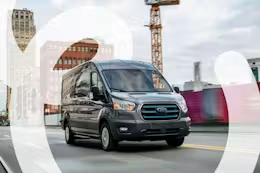

Where the PV5 made its name as a small, distinctive-looking van that turned heads well beyond the trade, the PV7 takes a different approach: bigger, boxier, and built for jobs that need serious capacity.
So can it match the PV5 on star power? It's a fair question to ask. The PV5 became one of those rare commercial vehicles people actually recognised on the road, more cult classic than cargo van. The PV7 doesn't chase the same cute factor. Its upright, cab-forward silhouette is all business. But what it lacks in charm, it makes up for in capability, and that might be exactly what wins it a following of its own among last-mile delivery fleets and trades businesses who need the space to match.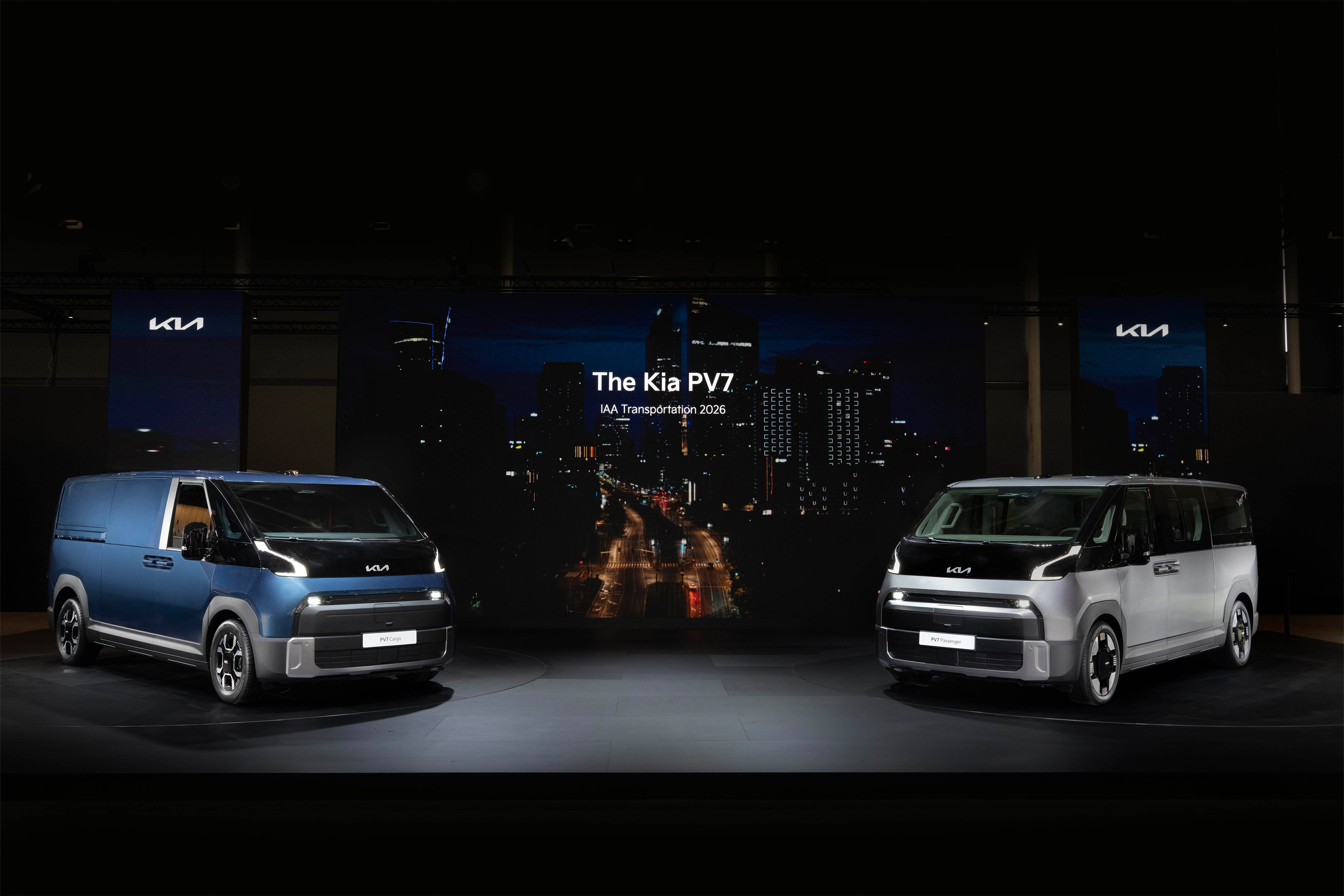
What's new
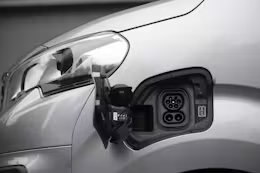
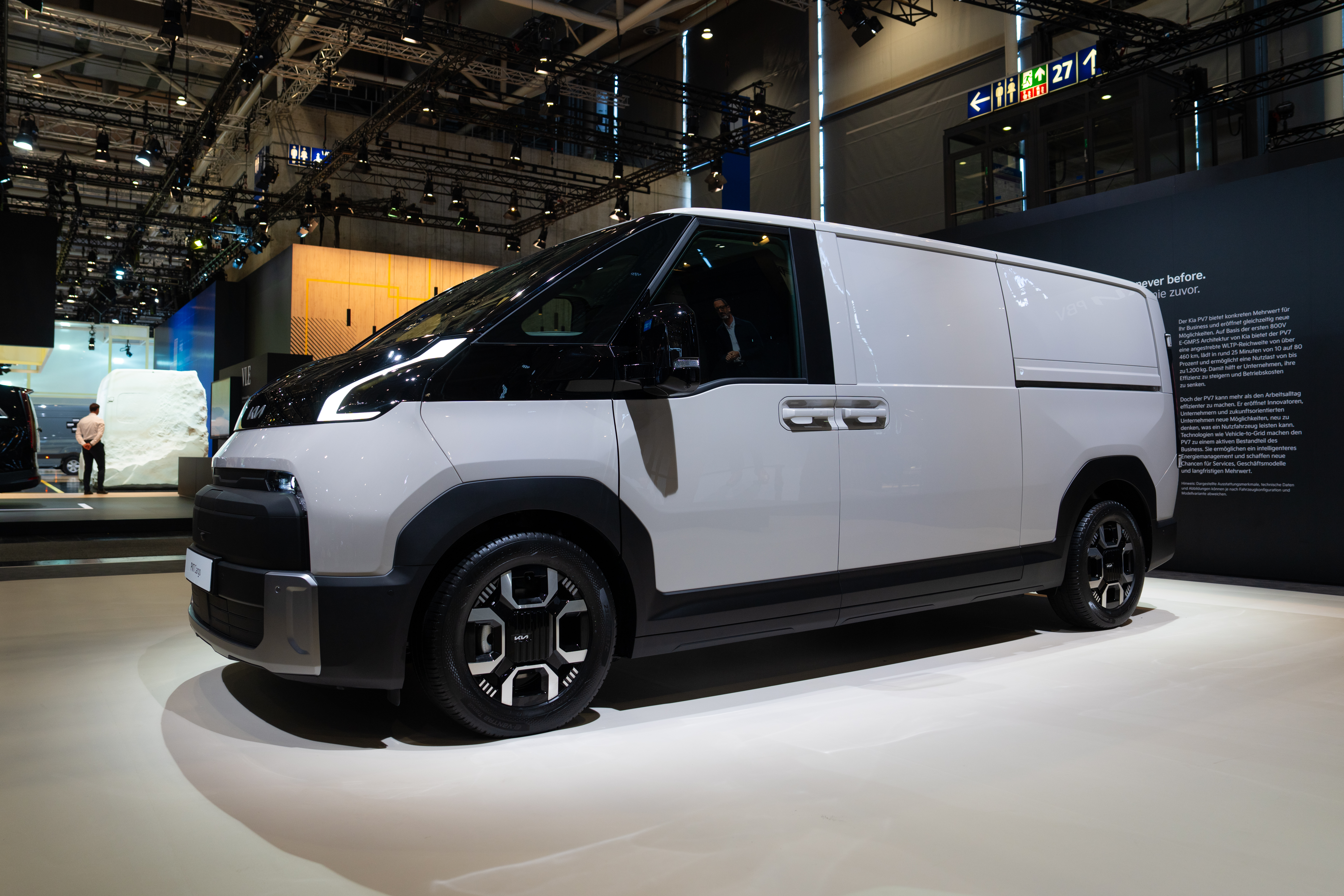
Built on Kia's PBV-dedicated E-GMP.S architecture, the PV7 comes in Cargo and Passenger variants, with batteries of 71.5kWh or 96.2kWh and up to 200kW of power. The Long Range Cargo version offers over 285 miles of WLTP range, and 800V architecture means a 10-80% charge in the mid-20-minute range on a 350kW DC rapid charger. It's also the first Kia with dual charging ports, front and rear, for more flexibility around where you park to charge.
On the Cargo side, load space runs up to 8.0m³ with payload up to 1,200kg, a 550mm loading height, and capacity for three Euro pallets. The Passenger variant seats up to nine (11 in Korea), with flexible, removable seating and rear climate control for longer journeys.
Both variants get Vehicle-to-Load functionality, so the van itself can power tools and equipment on site, plus a heavy-load driving mode designed to keep things stable when it's fully loaded.
When you'll see it
Kia's showing the PV7 to the public at IAA Transportation until 20 September, with UK and European launch expected in the second half of 2027. Twenty-three variants are planned in total, including a chassis cab and a range of conversion models, so there should be a configuration for most operational needs.
Our take
Whether the PV7 earns the same double-takes as its predecessor probably isn't the point. Businesses running last-mile delivery or trades operations need range, payload and charging speed more than they need charm, and on paper the PV7 delivers all three. If it becomes even half as recognisable as the PV5, Kia will have done something right twice in a row.
If you're weighing up EV vans for your fleet as new models like this come to market, our team can help you compare what's actually available against your operational needs: Get in touch. Or to stay in the EV news loop join our mailing list.