


London Congestion Charge and electric vehicles: Everything you need to know
There are plenty of reasons why electric vehicles (EVs) are the future of motoring both in the UK and around the world. You only have to look to the London Congestion Charge for proof of that. Faced with the rising threat of climate change, one of the government’s first major steps to combat dangerous levels of carbon dioxide emissions in the country was introduce the Congestion Charge.
The good news is that the savings are still worthwhile, especially for electric vans. Here's what has changed, what you'll pay in an electric car or van, and how to make sure you're not paying more than you need to.
What is the London Congestion Charge?
The London Congestion Charge is a daily fee for driving in central London during charging hours. It was first introduced in February 2003 to cut traffic in the capital and encourage people to walk, cycle or use public transport instead.
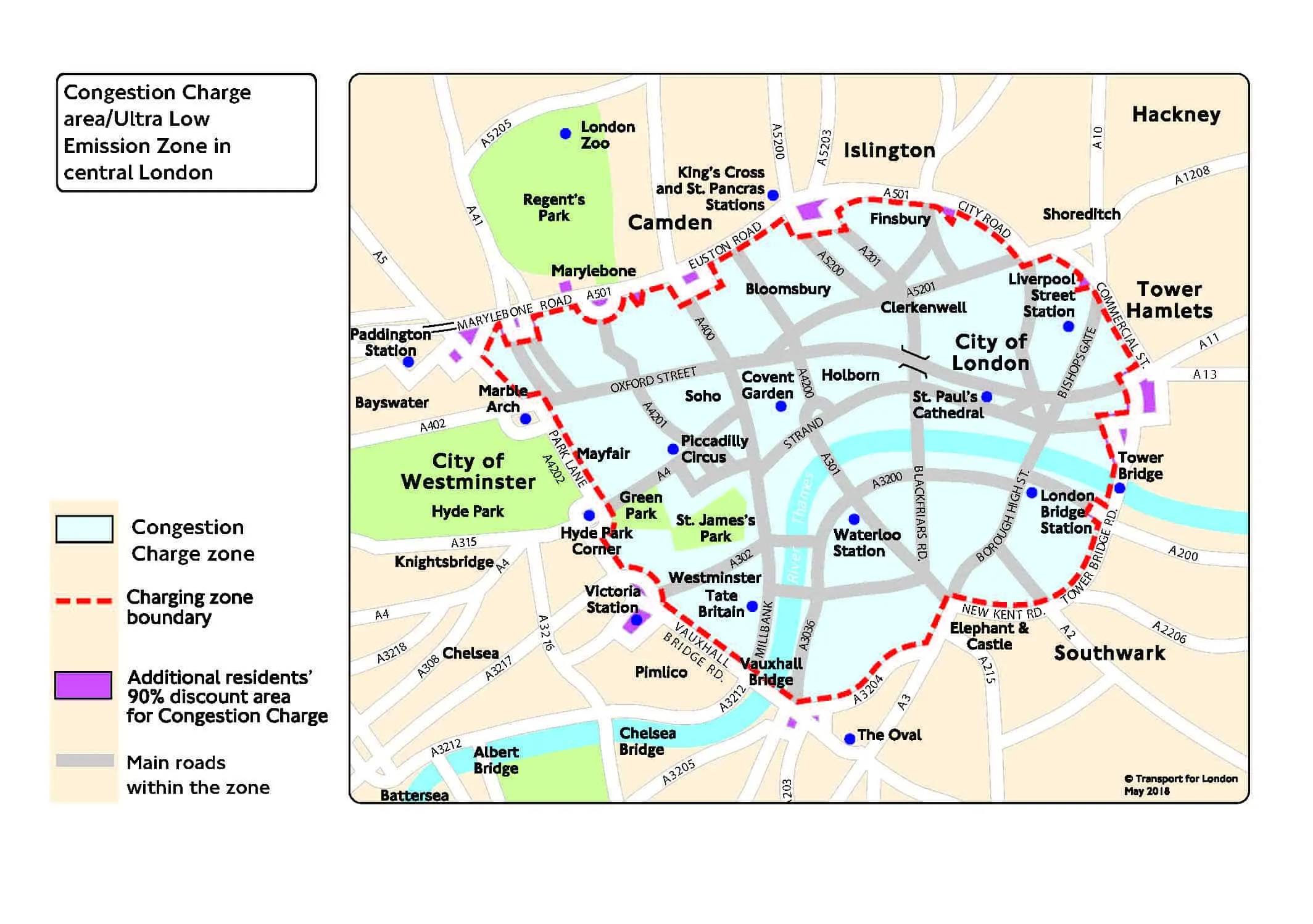
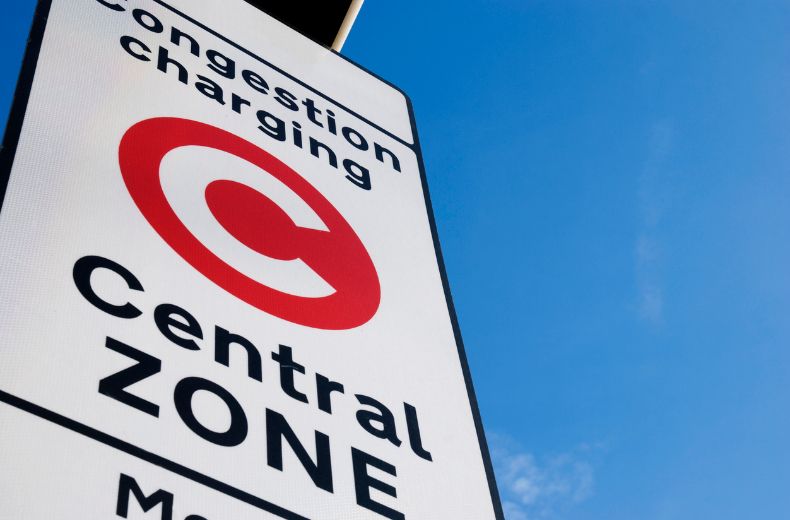
The zone is signposted with a large white letter 'C' in a red circle. You pay once per day, however many times you drive in and out.
(Mon-Fri)
| London Congestion Charge at a glance | |
|---|---|
| Daily charge | £18 (since 2 January 2026, the first rise since 2020) |
| Electric car (on Auto Pay) | £13.50 per day |
| Electric van (on Auto Pay) |
£9 per day |
Map of the London Congestion Charge area
Do electric cars pay the Congestion Charge?
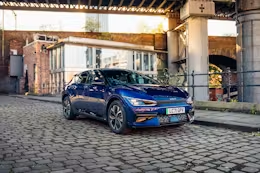
Yes. The 100% Cleaner Vehicle Discount, which let fully electric cars drive in the zone for free, ended on 25 December 2025.
It has been replaced by a new tiered Cleaner Vehicle Discount, which only applies to electric vehicles registered for TfL's Auto Pay:
- From 2 January 2026: electric cars get a 25% discount, so you pay £13.50 a day instead of £18.
- From 4 March 2030: the discount for electric cars drops to 12.5%, or £15.75 a day at today's £18 rate.
If your electric car isn't registered for Auto Pay, you'll pay the full £18, the same as a petrol or diesel car.
Do hybrid cars pay the Congestion Charge?
Yes, hybrid cars pay the full £18. Only fully electric cars qualify for the Cleaner Vehicle Discount, so plug-in hybrids and self-charging hybrids pay the same as petrol and diesel cars.
Do electric vans pay the Congestion Charge?
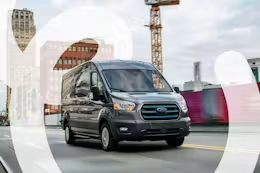
Yes, but electric vans get a bigger discount than electric cars. Registered on Auto Pay, an electric van pays £9 a day, half the standard £18 charge.
- From 2 January 2026: 50% discount for electric vans, HGVs and quadricycles, so £9 a day.
- From 4 March 2030: the discount drops to 25%, or £13.50 a day at today's £18 rate.
For businesses with vans in central London every day, that difference adds up quickly. A van entering the zone on 260 working days a year would pay £2,340 as an electric model, compared with £4,680 for a diesel. That's a saving of £2,340 per van, per year, before you factor in lower running costs. Find out more in our guide: Can businesses save money by switching to an electric van fleet?
Older diesel vans that don't meet ULEZ standards also pay the £12.50 daily ULEZ charge on top, while electric vans are exempt.
If you manage six or more vehicles, you can register them all through TfL's Fleet Auto Pay.
How to get the electric vehicle discount
The discount isn't applied automatically to every EV. To get it, your vehicle needs to be registered for TfL's Auto Pay.
- Set up an Auto Pay account on the TfL website.
- Add your vehicle. You can register up to five vehicles, with no fees to set up the account or add vehicles.
- TfL charges your account at the discounted rate for each day you drive in the zone, billed monthly.
Businesses with six or more vehicles can use Fleet Auto Pay instead. If your EV was already registered for Auto Pay with the correct details, the new discount is applied without you needing to do anything.
A word of warning: if your electric car or van isn't registered, you'll pay the full £18.
How much is the London Congestion Charge in 2026?
The standard charge is £18 a day, and it's the same whether you spend all day in central London or just pop in for a few minutes. Based on 22 working days a month and 260 a year, here's what a daily commuter would pay:
|
Vehicle |
Per day |
Per month |
Per year |
|---|---|---|---|
|
Petrol or diesel car or van |
£18 |
£396 |
£4,680 |
|
Electric car, not on Auto Pay |
£18 |
£396 |
£4,680 |
|
Electric car on Auto Pay |
£13.50 |
£297 |
£3,510 |
|
Electric van on Auto Pay |
£9 |
£198 |
£2,340 |
So an electric car on Auto Pay saves around £1,170 a year compared with petrol or diesel, while an electric van saves around £2,340.
If you don't pay, you'll get a Penalty Charge Notice of £180, reduced to £90 if you pay within 14 days.
Do I need to pay the Congestion Charge?
Most drivers do. Unless you qualify for a discount or exemption, you'll pay £18 for each day you drive in the zone during charging hours, whatever you drive. Electric cars and vans pay a reduced rate if they're registered for Auto Pay.
Congestion Charge exemptions and discounts
Fully electric vehicles are no longer exempt from the Congestion Charge, only discounted. These drivers and vehicles can claim an exemption or discount:
- Blue Badge holders can register for an exemption.
- Licensed London taxis (black cabs) are exempt.
- Residents living inside the zone can apply for a 90% discount. Residents already getting it before 1 March 2027 keep it whatever they drive, but new applicants after that date will only qualify with an electric vehicle.
- Vehicles with nine or more seats can qualify for a discount.
The Residents' Discount also requires Auto Pay, so it's worth setting up an account either way.
What's the difference between the Congestion Charge and ULEZ?
The two are separate schemes, and fully electric cars and vans are still exempt from ULEZ.
|
|
Congestion Charge |
ULEZ |
|---|---|---|
|
Area |
Central London only |
All London boroughs (since August 2023) |
|
Hours |
7am to 6pm weekdays, 12pm to 6pm weekends and bank holidays |
24 hours a day, every day except Christmas Day |
|
Daily cost |
£18 |
£12.50 for non-compliant cars, motorcycles and smaller vans |
|
Electric cars |
£13.50 on Auto Pay |
Exempt |
|
Electric vans |
£9 on Auto Pay |
Exempt |
A vehicle that doesn't meet ULEZ standards and drives into central London during charging hours pays both, which is £30.50 a day.
Find out more in our guide to London's Ultra Low Emission Zone (ULEZ).
Is the Congestion Charge here to stay?
In a word, yes. TfL says the 2026 changes were needed to stop more than 2,000 extra vehicles driving in the zone on an average weekday, and the discounts for electric vehicles are already scheduled to shrink again in 2030.
Even so, going electric remains the cheapest way to drive in central London. Electric cars pay 25% less than petrol and diesel, electric vans pay half, and both are exempt from ULEZ.
If you're thinking about switching, DriveElectric offers electric car leasing for personal and business drivers, as well as electric van leasing for businesses of every size. Give us a call or get in touch via our online contact form and we'll help you work out the savings.
Last updated: Nov 2026
Published: Jul 2021