
Once the £3,750 Electric Car Grant (ECG) is applied, Renault quotes on-the-road prices from £28,245 for the Megane and £33,245 for the Scenic. The manufacturer also says every electric passenger car in its current UK range now has at least one version that qualifies for the full grant.
Megane E-Tech: a new LFP battery and a simpler range
The Megane line-up is cut to two versions, techno and esprit Alpine. Both use a 220hp motor and a new 67kWh lithium iron phosphate (LFP) battery.
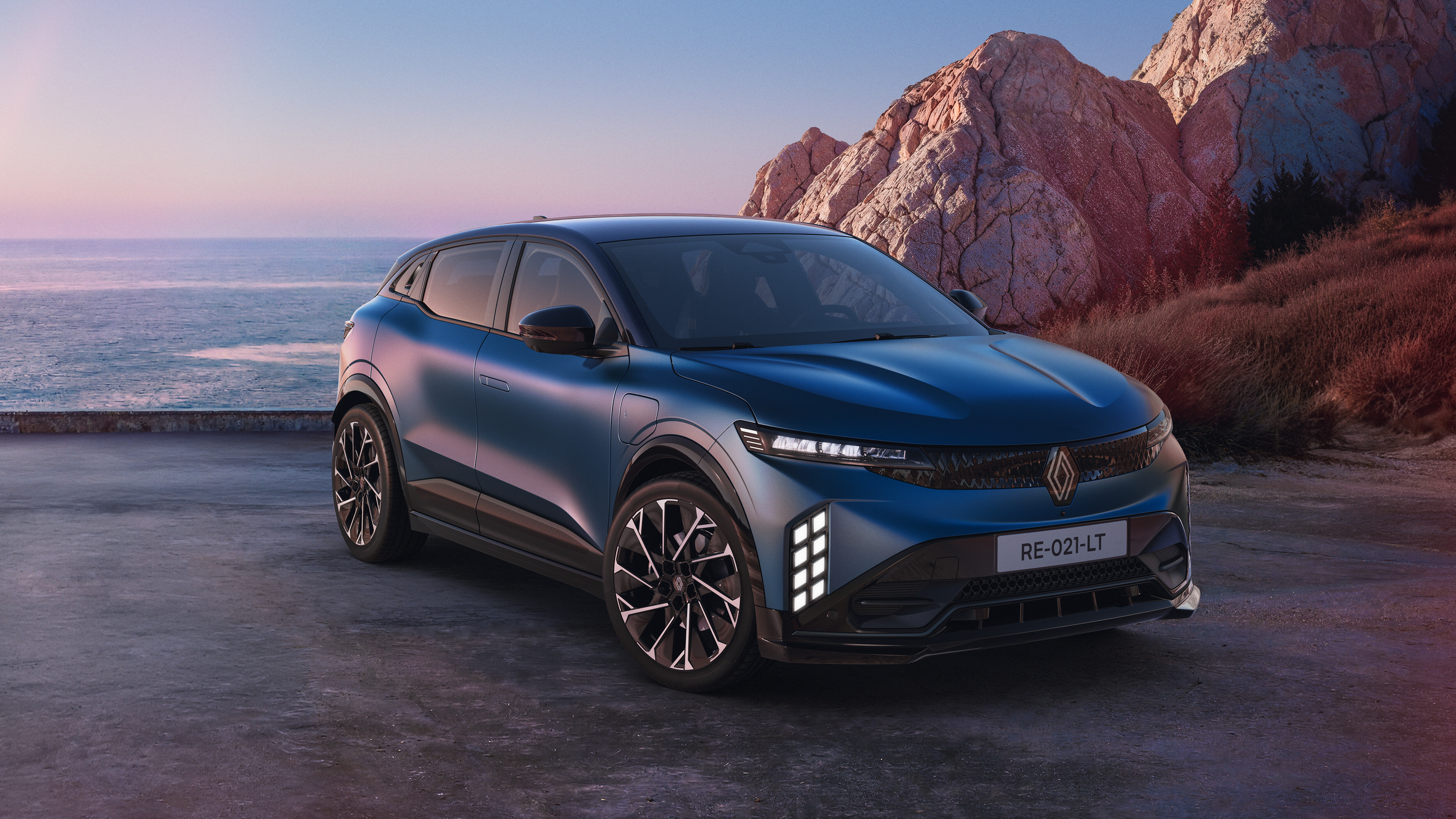
Renault claims up to 306 miles of WLTP range in techno spec, which it says is 21 miles more than the outgoing car. The esprit Alpine is rated at up to 298 miles. As ever, WLTP figures are tested under standard conditions, so real-world range will vary with speed, temperature and driving style.
Charging has also improved. Peak DC speed rises to 165kW, and Renault says a 15-80% charge takes around 24 minutes. An 11kW AC charger is standard.
After the grant, techno is priced from £28,245 and esprit Alpine from £31,245.
The front end has been redesigned, with new daytime running lights and a closed grille, and techno now comes with 19-inch wheels as standard.
Scenic E-Tech: more range, same motor
The Scenic's changes are more evolutionary. All three trims (techno, techno esprit Alpine and iconic esprit Alpine) use a new 89kWh NMC battery with the same 220hp motor.
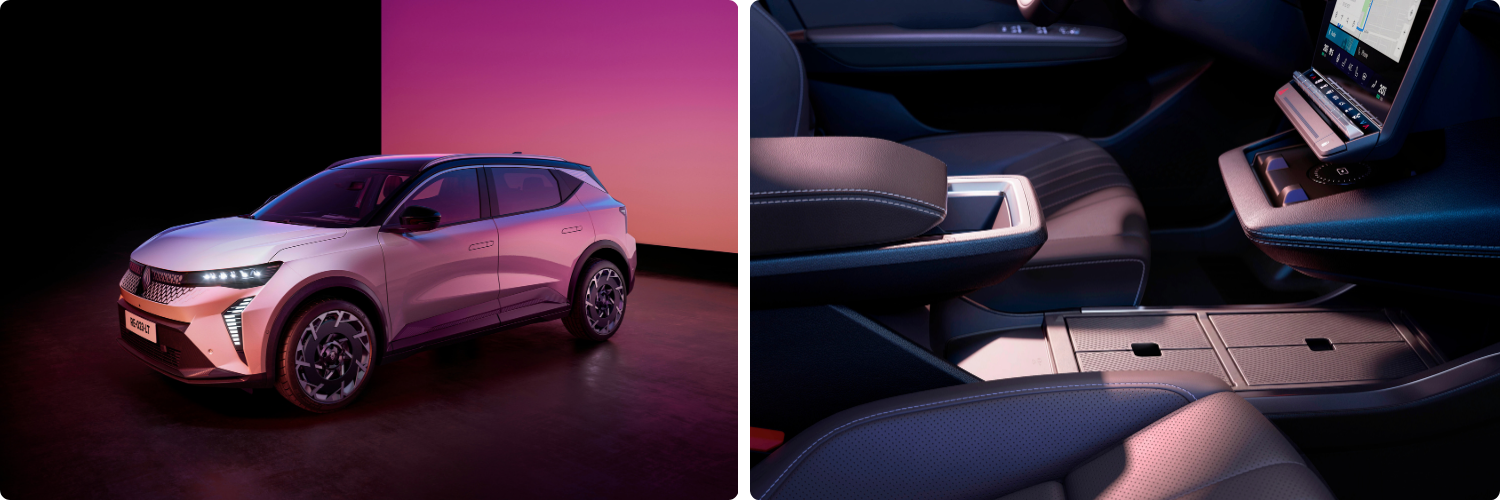
Renault quotes up to 392 miles of WLTP range for techno, 385 miles for techno esprit Alpine and 382 miles for iconic esprit Alpine. Peak DC charging is 150kW, with a 15-80% charge in 28 minutes, which Renault says is nine minutes quicker than before.
Other changes include a new 19-inch wheel design, two new colours (satin slate blue and exo galaxy grey), a reworked techno interior and more driver assistance kit. The entry techno is £33,245 after the grant, based on Renault's figures.
One thing to check on the tech
Both cars are marketed with Google Gemini for more natural voice control. Renault's own small print says it will arrive in a future update as an upgrade to Google Assistant, so it is not a day-one feature. Both cars also get a ventilated 15W wireless phone charger and a Smart Mode that adjusts the driving mode automatically.
What it means for drivers and fleets
The headline gains are in charging speed rather than range, and that is probably the more useful change for drivers who regularly cover long distances. Shorter stops make a real difference on motorway journeys.
The grant also keeps both cars in the market for many private drivers and businesses. If you are comparing leasing quotes, check how the grant is reflected in the monthly rental, and which version of the car it applies to.
Company car drivers and fleet managers should also look at the current Benefit-in-Kind rate for electric cars, which is rising in stages each year, before comparing total cost.
Want to keep up with news like this? Join our newsletter for the latest EV updates.