

If you have ever stood beside a supermarket zebra crossing or walked along a quiet British high street, you may have noticed an unusual sound: a futuristic hum, a soft whoosh or a gentle whirring as a car passes. Look closer and there is a good chance it is an electric vehicle (EV) or plug-in hybrid.
An electric car can be remarkably quiet as it pulls away from a kerb. That silence is one of the defining features of electric driving. But at low speeds, it can also create a safety problem.
That is why many electric and hybrid cars produce a warning sound. Known as an Acoustic Vehicle Alerting System (AVAS), it gives pedestrians an audible signal that a vehicle is approaching, particularly when the car is moving slowly and its tyres and motor produce little noise.
The safety problem starts at low speed
Electric motors do not produce the same engine noise as petrol or diesel cars, particularly when a vehicle is moving slowly. Tyre and wind noise also remain relatively low at these speeds.
European legislation recognised the issue when it introduced AVAS requirements. The regulation says quieter electric and hybrid vehicles can remove an important audible signal used by blind and visually impaired pedestrians, as well as other road users, to detect a vehicle's approach or departure.
Under the EU rules, AVAS must generate sound from start-up to about 20 km/h (12 mph) and while reversing. The rules also require the sound to convey information about the vehicle's operation, including changes linked to speed.
The United Nations framework similarly covers the low-speed range up to 20 km/h. The rationale is particularly important around car parks, junctions and crossings, where a pedestrian may need to detect a slowly moving vehicle without seeing it.
A symphony of brand identity
The law largely defines when the warning must operate and sets technical requirements. Manufacturers still have room to decide what their cars sound like within those boundaries. That has created a new field of automotive sound design:
- BMW worked with Academy Award-winning composer Hans Zimmer on its IconicSounds Electric system, developing bespoke soundscapes for its electric models. BMW says the sounds provide acoustic feedback linked to driving inputs and the selected driving mode.
- Fiat took a more recognisable route. Its electric 500 uses a melody composed by Nino Rota for the film Amarcord as its AVAS sound at low speeds.
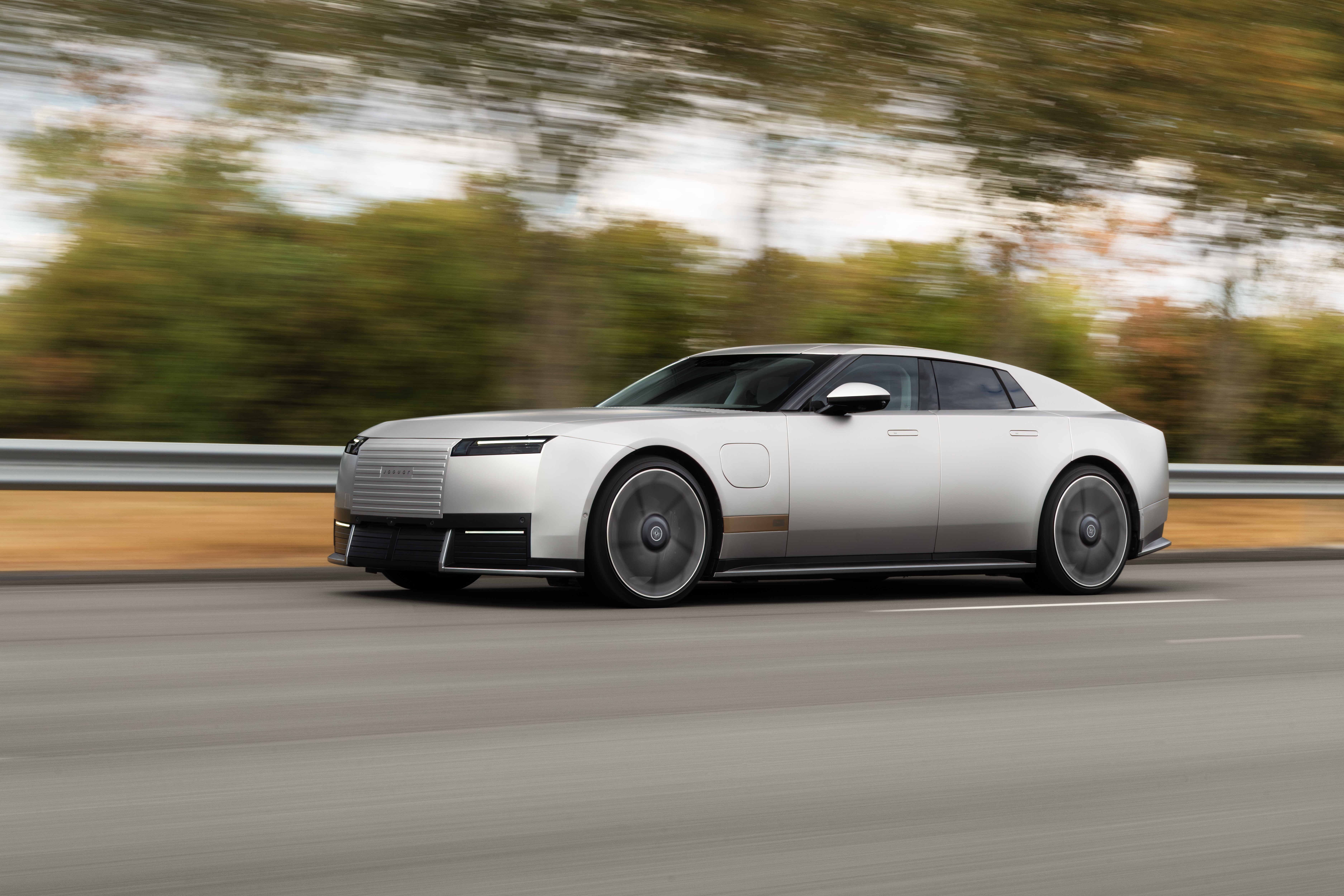
- Jaguar took a more explicitly safety-led approach with the I-Pace. Its engineers tested the sound with members of Guide Dogs and spent four years developing a system designed to be audible outside while remaining discreet inside the vehicle. Jaguar says the sound changes with speed and includes a different tone when reversing.
- The performance arm of Mercedes-Benz worked with Linkin Park as part of its work on developing artificial sounds for electrified cars. Mercedes-AMG said it wanted the band's interpretation of what an “electrified sound” could be, alongside input from other sound, film and gaming specialists.
Why the drive can still feel quiet
These sounds are not intended to turn an electric car into a petrol car. Their main job is concentrated where the vehicle is moving slowly and where its natural acoustic signature is weakest. Once speeds rise, tyre, aerodynamic and other road noise become increasingly noticeable. AVAS is generally unnecessary at higher speeds because those sounds provide greater audibility.
For drivers, that means the characteristic quietness of an EV remains largely intact. The added sound is a targeted intervention at low speed rather than a permanent soundtrack.
The result is a compromise: preserve much of the quiet driving experience while giving pedestrians, particularly those who cannot rely on sight, another way to detect a moving vehicle.
Want to know more about how electric cars work, what the common EV myths really mean and what to expect when making the switch? Explore our EV FAQs and guides.
Or join our mailing list to stay up to date with the lastest news and offers.