

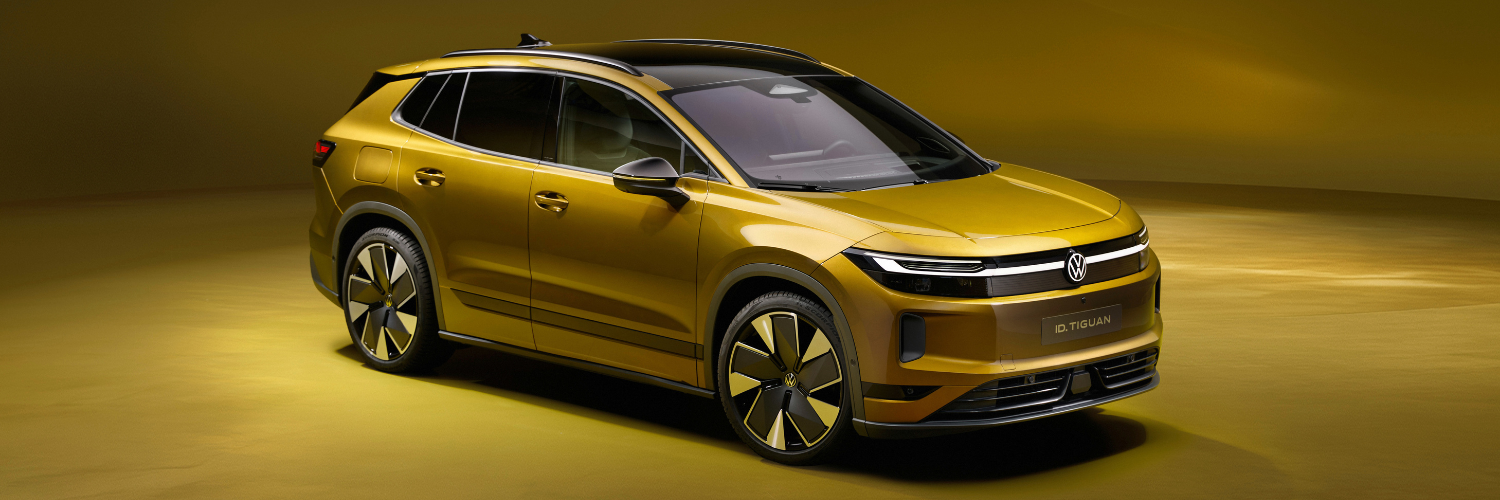
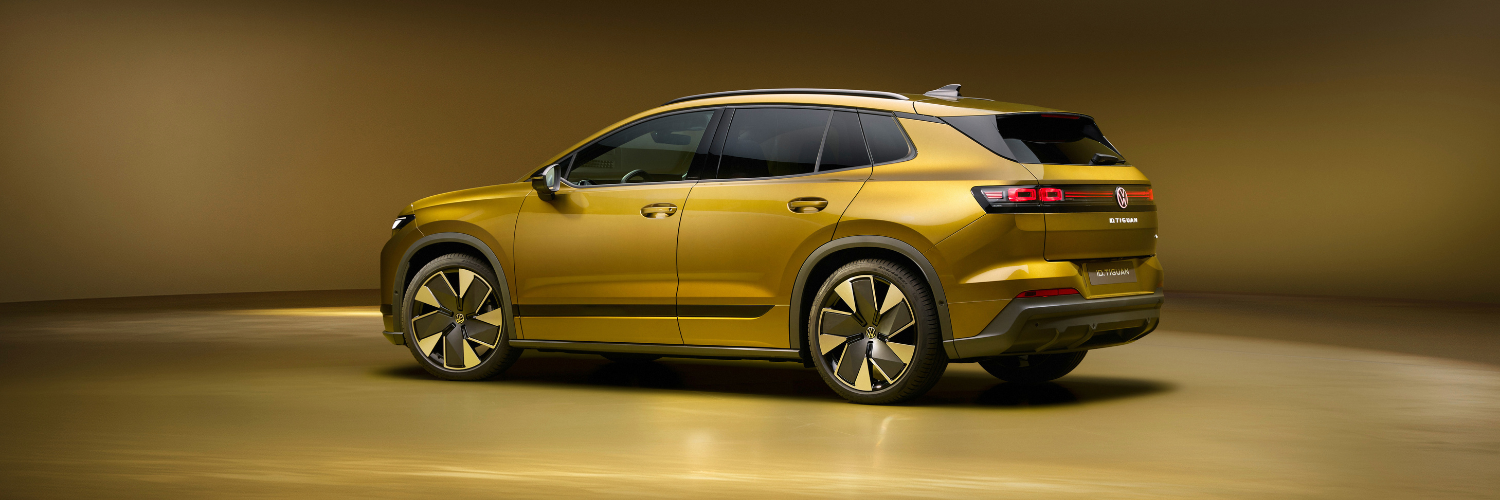
The new electric SUV follows the announcement covered in our earlier article, Volkswagen to reveal new electric ID. Tiguan in October, and gives us a much clearer picture of what Volkswagen has planned for its next generation of family EVs.
Alongside the new styling, the ID. Tiguan introduces a redesigned dashboard with physical controls, a new range of digital displays and a playful nod to Volkswagen's heritage. It will launch in early 2027, initially alongside the existing petrol, diesel and hybrid Tiguan.
A new direction for Volkswagen's electric SUVs
The ID. Tiguan represents a significant change for Volkswagen's electric line-up. Rather than continuing with the ID.4 and ID.5 names, the company is bringing one of its best-known combustion-engine model names into its electric range.
According to Volkswagen, more than 950,000 ID.4 and ID.5 vehicles have been built, making them important models in the brand's electric journey. The new ID. Tiguan will take over from both, combining their family-friendly SUV format with a revised design and updated technology.
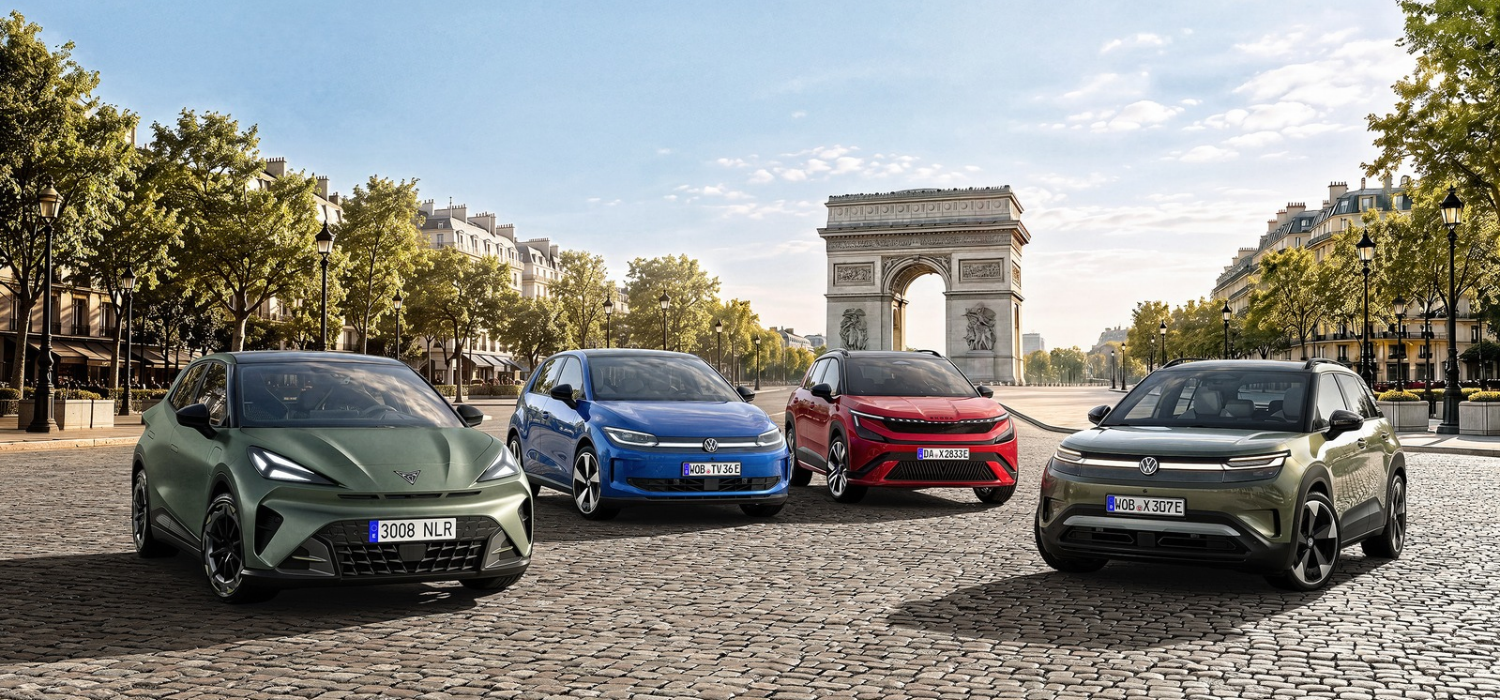
It's also part of a wider shift in Volkswagen's electric naming strategy. The recently announced ID.3 NEO, for example, brings a new name to an updated version of the existing electric hatchback. There has also been speculation about a future electric Golf, potentially arriving around 2028, although this remains unconfirmed.
It will be interesting to see whether Volkswagen continues to lean on familiar names as its electric range develops. For drivers who have owned a Golf or Tiguan for years, a recognisable badge could make the move to an EV feel more familiar.
Retro Golf displays are a clever touch
One of the most interesting features is inside the cabin. Volkswagen has introduced a new digital display mode inspired by the instruments of the fourth-generation Golf, complete with the familiar blue and red colour scheme.
Activate the setting using the steering wheel's View button, and the digital instrument panel takes on the appearance of a traditional speedometer and rev counter. The latter instead displays energy flow, rather than engine speed.
The central infotainment screen can also display a virtual garage featuring six historic Volkswagen models, including the Golf Mk1, Golf Mk2 Country, Golf Mk4, first-generation Tiguan, Race Touareg and Beetle.
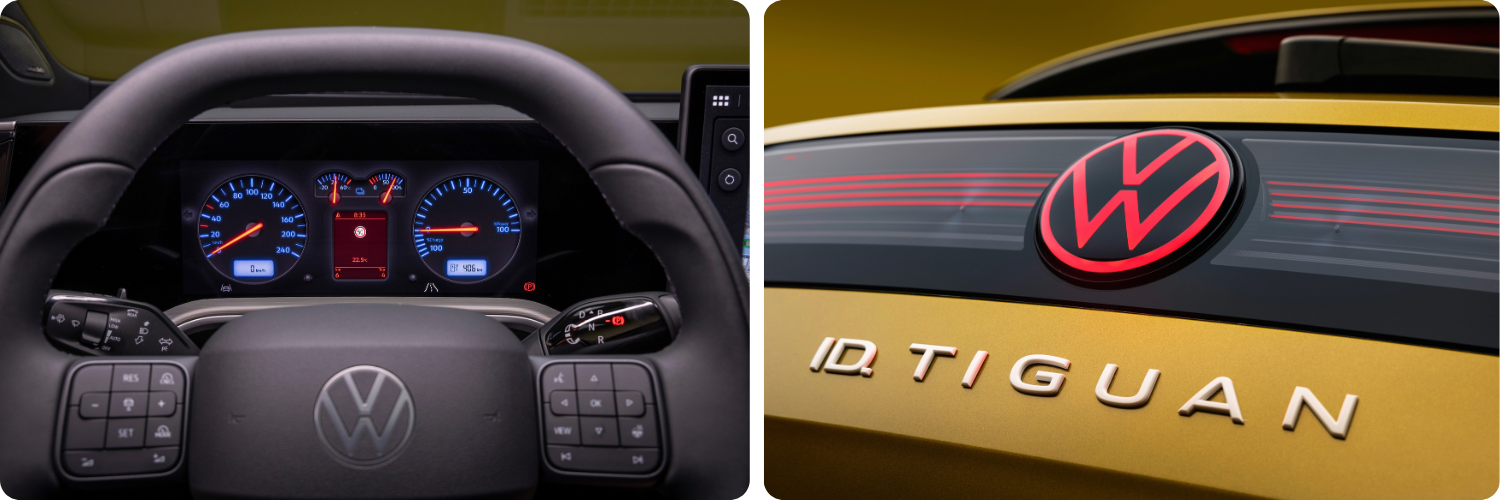
This feels like a clever move. Volkswagen has a loyal following, and features like this give owners a way to celebrate the brand's history without sacrificing the advantages of a modern digital cockpit. It's a small detail, but one that could make the car feel more distinctive than another electric SUV with a large touchscreen.
Volkswagen has also responded to criticism of touch-sensitive controls. The ID. Tiguan gets physical buttons on its multifunction steering wheel, while key climate functions return to a dedicated button bar. Audio adjustments are handled primarily through a central console controller.
The dashboard features a 10-inch driver display and a 15-inch central infotainment screen, alongside a 12-inch passenger display for the first time in a European Volkswagen. The passenger screen includes a privacy mode, allowing its user to access entertainment without distracting the driver.
An ID.4 driver's perspective
On a personal note, as an ID.4 driver, the new model is particularly interesting because it appears to build on a familiar formula rather than reinvent it entirely. There is a lot to like about the ID.4 and its a relief that's not all disappearing.
The ID.4 has established itself as a practical family EV, but the ID. Tiguan introduces several changes that could make everyday ownership more convenient. A headline new feature is the 32-litre front boot, or frunk.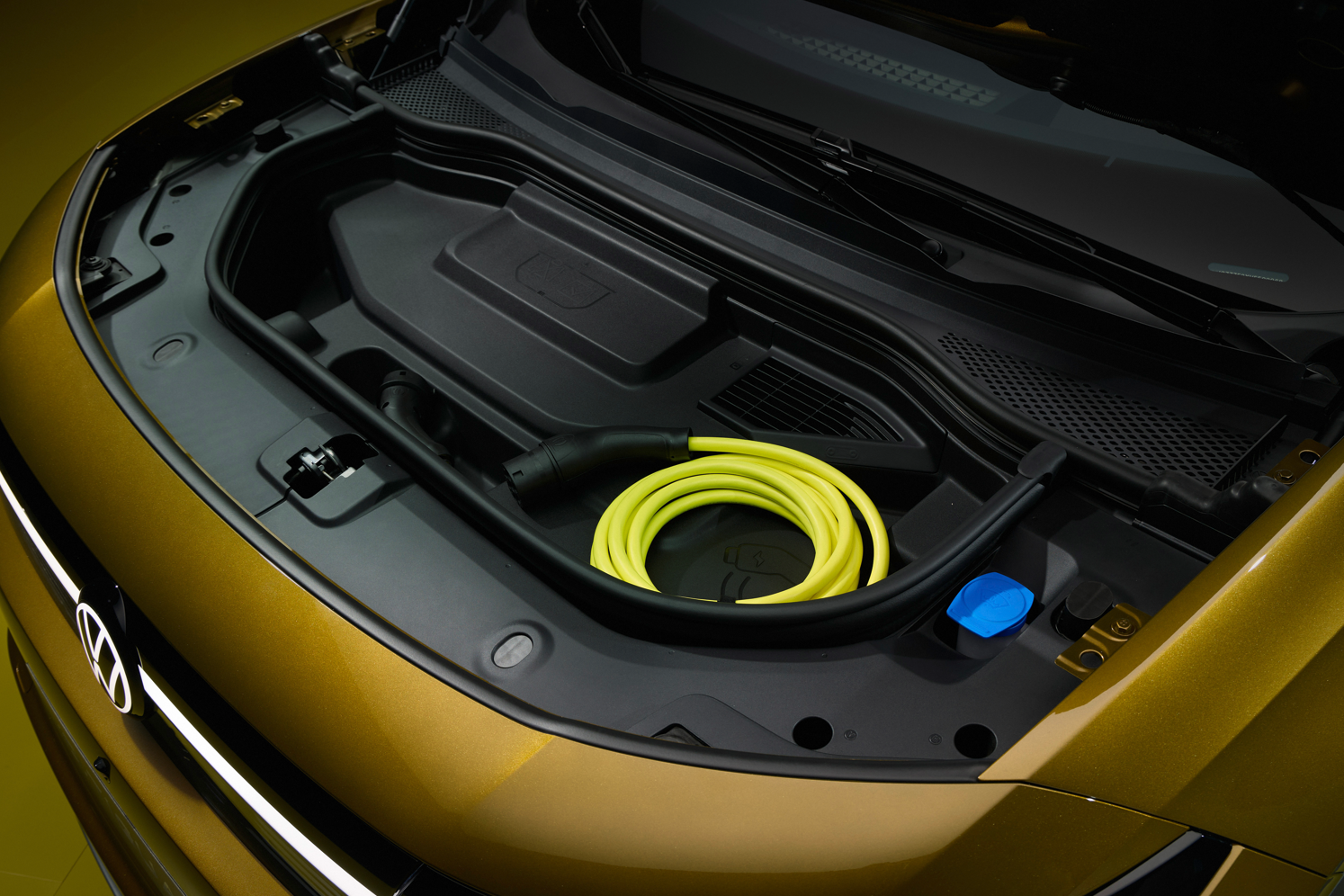
Neither the ID.4 nor the ID.5 has this extra storage compartment, so it's a useful addition to a vehicle designed around family life. It won't replace the main boot, but it could provide a handy place for charging cables or smaller items that you would rather keep separate from the main luggage area.
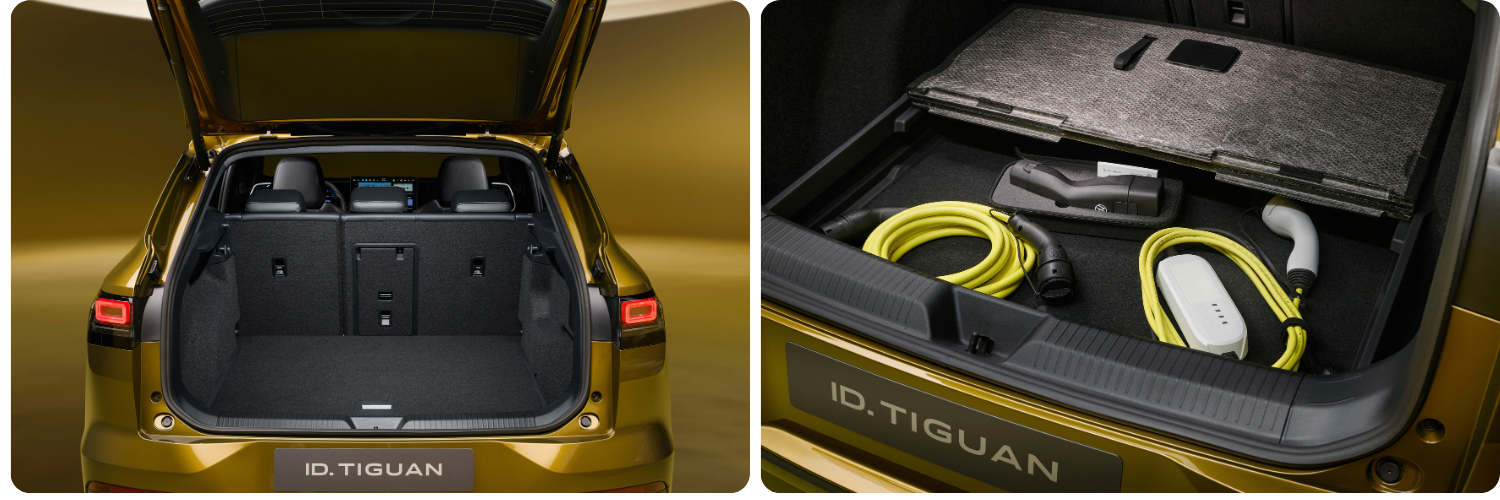
The ID. Tiguan has a main luggage capacity of up to 534 litres, while other practical extras include one-pedal driving, a digital key and vehicle-to-load capability for powering compatible electrical equipment.
There are comfort options too, including ventilated and massaging front seats, a panoramic sunroof and a 480-watt Harman Kardon sound system.
For anyone already driving an ID.4, the big question will be whether these changes represent a meaningful step forward in the areas that matter most: cabin usability, comfort, storage and real-world efficiency.
Range, performance and towing
Volkswagen will offer three powertrain options, with rear-wheel drive or all-wheel drive available.
The entry-level version has a 58kWh battery and produces 190PS. A more powerful rear-wheel-drive model uses a 77kWh battery and produces 286PS, while the range-topping all-wheel-drive version delivers 299PS from the same battery capacity.
Volkswagen quotes a maximum WLTP range of up to 373 miles, depending on the battery and specification. As with any EV, actual range will vary with temperature, driving style, speed and other conditions.
Towing capacity reaches 1,800kg with the smaller battery and 2,000kg with the larger one, which could make the ID. Tiguan an option for drivers who need to tow a trailer or caravan.
The figures look promising on paper, although UK specifications, pricing and the final range figures for individual versions still need to be confirmed.
How will it compare with the Skoda Enyaq?
Another interesting comparison will be with the Skoda Enyaq. Both models draw on Volkswagen Group's MEB electric vehicle platform, so there's a shared technical foundation beneath their different styling and branding.
The Enyaq has already established itself as a practical family electric SUV, and the ID. Tiguan's arrival will give buyers another option to consider within the same wider automotive family.
The comparison will be worth watching once the new Volkswagen is available on the road. Will its refreshed cabin, retro displays and additional front storage be enough to set it apart, or will the Enyaq continue to appeal through its own blend of practicality and equipment?
For personal and business leasing customers alike, the answer will depend on more than headline range figures. UK pricing, equipment levels, charging performance and eventual lease rates will all help determine how the two stack up.
When will the Volkswagen ID. Tiguan arrive?
Volkswagen says the ID. Tiguan will launch in early 2027, with pre-sales opening in Germany and several other European markets on 13 October 2026.
German prices start at €42,695, but this is not a confirmed UK price and shouldn't be treated as a direct indication of what the car will cost here.
For now, the ID. Tiguan looks like an important next step for Volkswagen's electric SUV range. The longer claimed range, more conventional controls and new storage space are all welcome developments. And while the retro dashboard might seem like a small feature, it could be one of the details that gives the car some genuine personality.
As an ID.4 driver, I'm particularly keen to see how it feels in everyday use and whether the new features make a noticeable difference. The frunk alone is an appealing addition, but the real test will come when the car reaches UK roads.