Brussels Motor Show 2026: What the latest EVs tell us about the road ahead
The Brussels Motor Show has quietly become one of the most interesting fixtures on the automotive calendar, especially for electric vehicles. With European manufacturers under pressure to electrify quickly, and buyers demanding more affordable, practical and usable EVs, Brussels offers a useful snapshot of where the market is really heading.
This year’s show delivered exactly that: a mix of small, attainable electric cars, bold concept vehicles, and a growing focus on utility and business-ready EVs. Rather than one headline-grabbing launch, the story was about breadth of choice, and what that means for drivers, fleets and leasing customers over the next few years.
Small electric cars are having a moment
One of the strongest themes from Brussels was the continued push towards smaller, more accessible electric cars. After years of electric cars skewing large and expensive, manufacturers are clearly responding to demand for compact models that work for everyday driving.
Renault had a particularly strong presence, with the much-anticipated Renault 5 drawing crowds, including interest in sportier RS-inspired versions. Alongside it sat the Renault Twingo E-Tech, reinforcing Renault’s commitment to making electric cars genuinely affordable and urban-friendly.

Renault Twingo e-tech

Kia EV2
Nissan’s new Micra points in a similar direction, while the Volkswagen ID.2 and ID. Everyone concepts underline VW’s intent to bring smaller electric hatchbacks to market at scale. Kia’s compact EV2 concept also fits neatly into this trend, hinting at future entry-level EVs that don’t compromise on design or technology.
Even the ultra-compact end of the spectrum was represented. Vehicles like the Fiat Ami and the Fiat Panda Grande show how electric mobility can cater for short trips, city living and younger or cost-conscious drivers, an important part of the wider EV ecosystem.
Concepts that show where EV design is heading
Concept cars remain a useful way of understanding how brands see the future, and Brussels delivered plenty to talk about.
Standouts included the Dacia Hipster concept, which leaned into rugged, lifestyle-led design, and the DS No.4 Tailor Made concept, showcasing how electrification can go hand-in-hand with premium customisation. Hyundai’s eye-catching Insteroid concept was a reminder that EVs are also giving designers more freedom to be playful and experimental.

Dacia Hipster Concept - Side view

Dacia Hipster Concept
Audi’s Concept C and Mazda’s CX-6e (previewed in both SUV and saloon forms) further highlighted how established manufacturers are rethinking familiar segments through an electric lens.
While not all of these vehicles will reach production unchanged, the direction of travel is clear: more distinctive design, more flexible platforms, and EVs that feel purpose-built rather than adapted from petrol models.
Electric utility and people-movers gain momentum
Beyond passenger cars, Brussels also highlighted the growing importance of electric vehicles designed for work.

The Hyundai Staria EV (pictured above) stood out as a potential game-changer for businesses needing space and flexibility, while the Citroën e-LO utility MPV concept (pictured below) designed to seat up to six people explored how electric power can support multi-purpose commercial use. Even niche ideas like the Fiat Tris, a modern, electric take on the Piaggio Ape delivery vehicle, point to innovation happening at every level of the market.
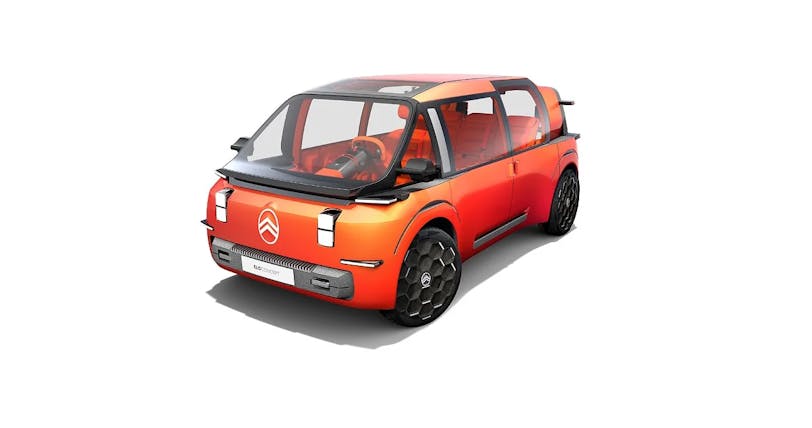
These models reflect a wider shift: electric vans and people carriers are no longer just about compliance or urban access. Improvements in range, payload and charging are making them viable for a broader range of real-world jobs.
Performance, premium and familiar favourites
Brussels wasn’t all about practicality. The show also featured high-end and performance-focused EVs, including the dramatic Rimac Nevera R, underlining just how far electric performance has come.
Kia also used the show to preview the next chapter of its GT line-up, revealing fully electric EV3 GT, EV4 GT and EV5 GT models. Building on a badge that drivers already recognise, Kia’s GT approach blends sporty character with intelligent, software-led features, from GT-exclusive drive modes to electronically controlled chassis systems, reinforcing the idea that electrification can still deliver an engaging, emotional drive without sacrificing everyday usability.

Kia EV3 GT at Brussels Motor Show 2026

Kia EV3 GT interior at Brussels Motor Show 2026
More familiar nameplates were also present, such as the Peugeot 308 Estate, the Mitsubishi Outlander, and the Ford Ranger MS-RT PHEV, highlighting how electrification is increasingly blending into established models rather than replacing them entirely.
The Mercedes CLA, crowned European Car of the Year, was another reminder that electric and electrified vehicles are now firmly in the mainstream.
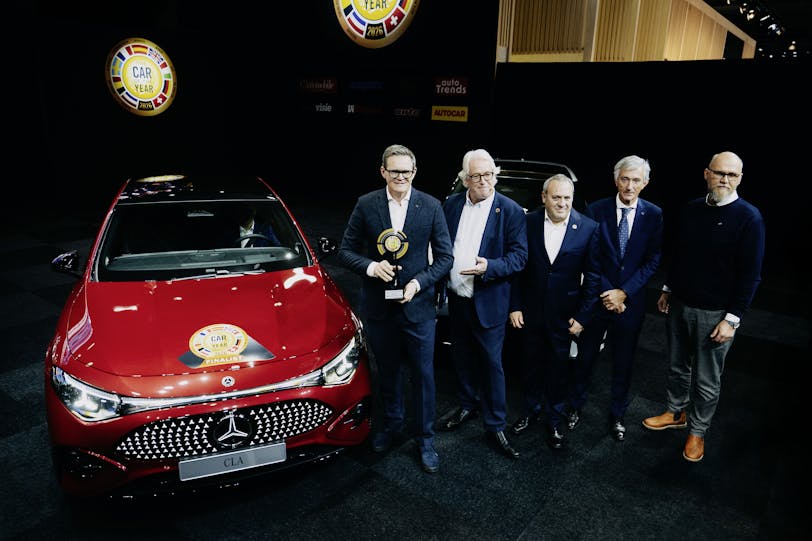
Mercedes CLA Crowned "European Car of the Year 2026" at Brussels Motor Show
What this means for EV buyers and fleets
Taken together, the Brussels Motor Show paints an encouraging picture. The next wave of electric vehicles isn’t just about premium SUVs or early adopters, it’s about choice.
Smaller cars are becoming more affordable, electric vans are more capable, and manufacturers are clearly thinking about how EVs fit into everyday life and business use. For leasing customers and fleets, that means more opportunities to match vehicles to real needs, rather than compromising due to limited availability.
As these models move from concept to production over the coming years, they’re likely to play a key role in accelerating electric car and van adoption across both private and commercial sectors. If Brussels is any indication, the electric future is not only closer, it’s also far more varied than before.


