


How to charge an electric car in public?
More drivers and businesses than ever are switching to electric vehicles (EVs) thanks to their lower running and maintenance costs, reliably great performance, and lower environmental impact.
Key highlights:
- Whilst most EV charging is done at home, tens of thousands of public EV charge points are available throughout the UK.
- Public EV charge points offer a variety of charging speeds, from slow charging to ultra-rapid public chargers now delivering up to 350kWh.
- Public EV charging is available at destinations like supermarkets and shops, en-route at locations like service stations, and via community initiatives like kerbside charging on residential streets.
- You can easily find the location of charging stations online or via apps like Google Maps, Apple Maps, or Zap-Map.
- To use a public charging station, first make sure it’s compatible, authenticate yourself, monitor the charging session, unplug and pay, and you’re good to go.
Whilst around 90% of EV charging is done at home, the UK’s charging network is constantly expanding as electric cars become more popular. Whether you’re embarking on a long road trip or just driving for everyday tasks, you have more options than ever for topping up your batteries at electric charging stations.
Here, we tell you everything you need to know about how to charge an electric car in public. We’ll cover how to find public charging stations, how to use EV charging stations, and how to pay for EV charging.
What is public EV charging?
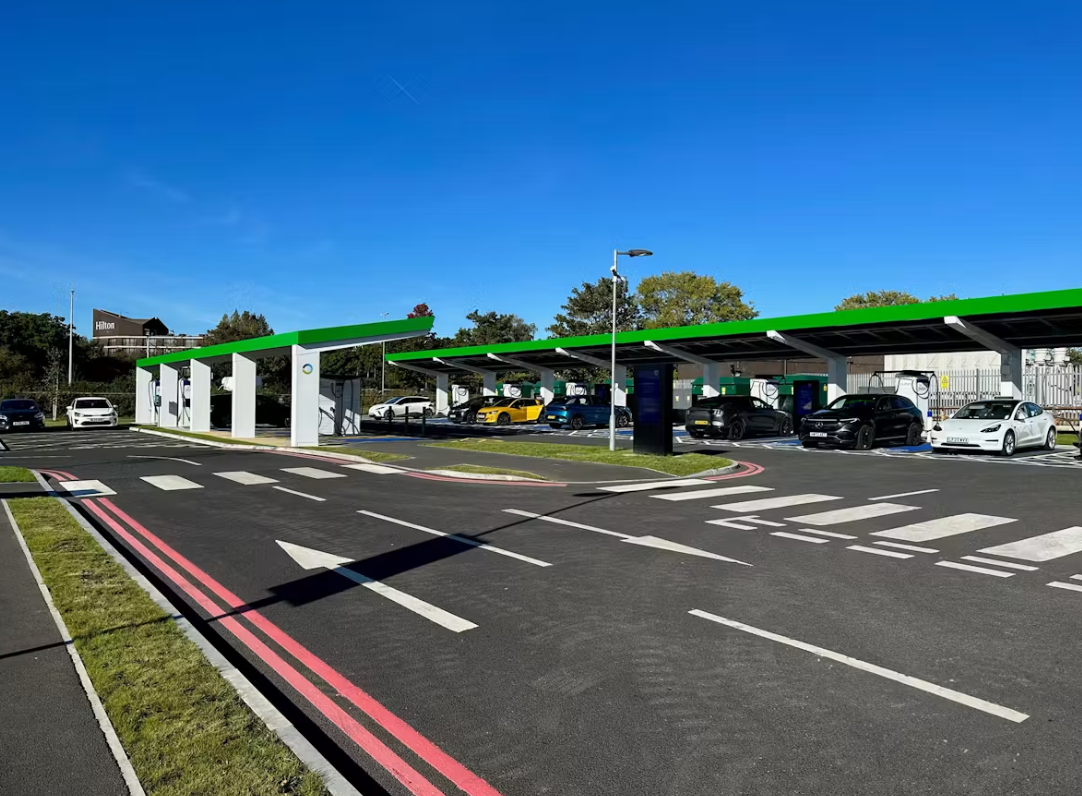
To make it perfectly clear what we’re talking about here, public charging means using a charging station that’s available to members of the public. Whereas private charging means using a charging station at home or at your workplace, public charging can include using a charger in a car park, at a motorway service station, or at a supermarket as you pop inside to shop.
What types of public EV charging are available in the UK?
Not all public charging stations are equal, they’ll offer different levels of power and prices. Often it depends on the type of location you’re at and how long you’d be expected to leave your car there. You’ll find broadly four different kinds of public charging station available:
Slow public chargers (up to 6kW)
Typically found at locations where you’d leave your car for longer periods of time, like at your place of work or at longer-term car parks.
Fast public chargers (7kW to 40kW)
Usually found in car parks for public destinations, like supermarkets, shops, or leisure centres.
Rapid public chargers (40kW to 100kW)
Found at locations where you won’t usually park for too long, like motorway service stations or road-side charge points.
Ultra-rapid public chargers (100kW to 350kW)
Can be increasingly found at service stations and other select locations throughout the UK.
Where can I find public charging stations?
Again, there are broad categories of public charging station locations:
- Destination public charging locations - are found at locations you’d be driving to anyway, that offer convenient EV charging whilst you’re there. These include car parks at supermarkets, shops, gyms, and cinemas.
- En-route public charging locations - are charging stations you stop at during a journey. These include charge points at petrol stations, service stations, and dedicated charging locations like those offered by ESB Energy, Fastned, GeniePoint, and others.
- Community public charging locations - charge points made available by community sharing initiatives. These include private home chargers being made available for public use (like Zap-Home), kerbside charging on public roads, and chargers made available by private businesses that you’re not visiting for any other reason than to charge.
How do I find public EV charging stations?
You can easily find public EV charge points throughout the UK with a little online research.
Google Maps and Apple Maps now show EV charging locations, and can be used to easily find charge points near you or along routes of planned journeys.
Alternatively, you can find a range of dedicated EV charge point finder apps from the Apple App Store or via Google Play store, with Zap-Map, PlugShare, and ChargePoint the most widely used.
You’ll also often become familiar with destination public EV charge points available around you as you go about your daily life. Keep your eyes peeled and you’ll notice public charging stations at the supermarkets, shops, and other destinations you regularly visit.
How to use a public EV charging station?
Once you’ve located a public charging station, you should:
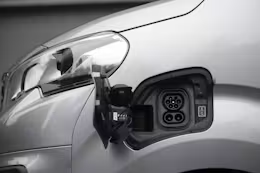
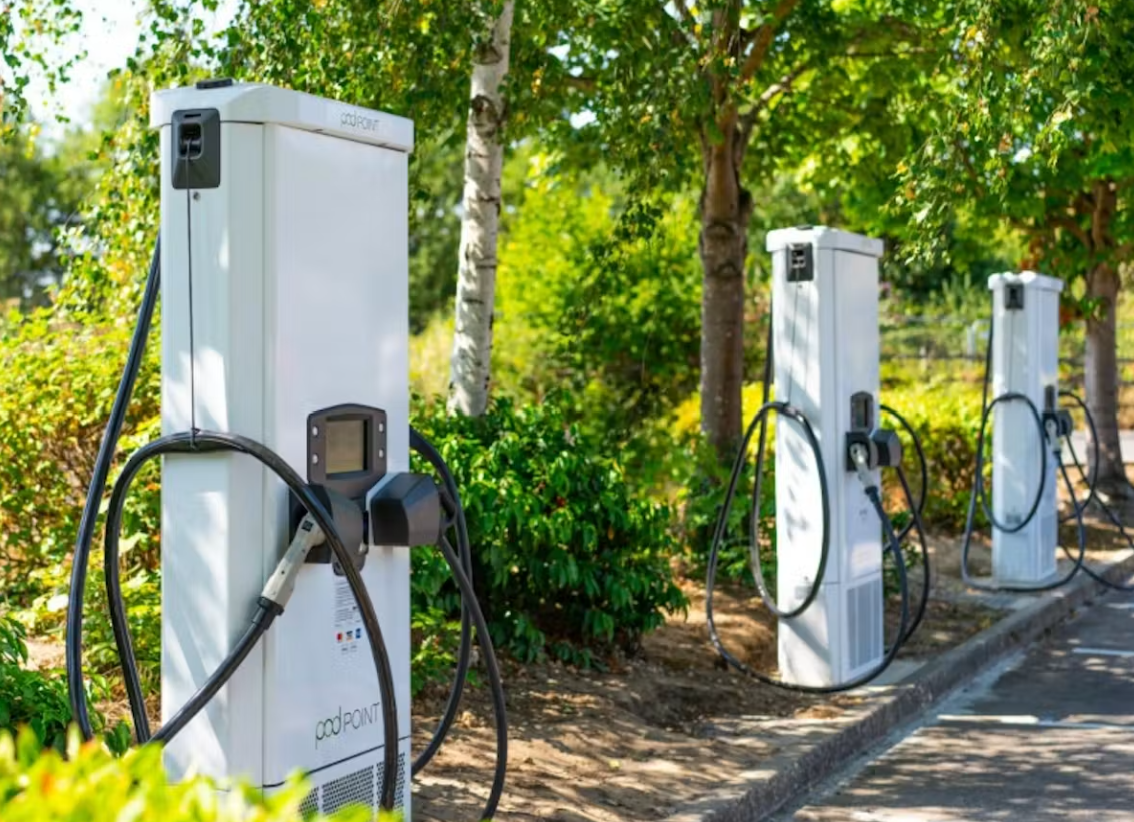
- Check it’s compatible - make sure the charge point has a connector that matches your EV, such as Type 1 or Type 2 connector for slow charging or CHAdeMO or CCS connector for fast charging. If you’re not sure, check your vehicle’s user manual. Some charge points will allow you to use your own connection cables.
- Authenticate and start charging - you’ll typically need to authenticate yourself and verify your payment method before you can begin charging. You can often do this with your debit or credit card, or you may need to use an app offered by the network, or another device like a RFID card, fob, or keycard. Then follow the instructions to begin charging.
- Monitor the session - the charge point should allow you to monitor the charging status, battery level of your EV, and the estimated time to fully charge, often via an app.
- End the charging session - once your EV is sufficiently charged, stop the session using the controls on the charge point or the app you’re using. Unplug the charging cable, securely replace it, and you’re ready to go.
How to pay for EV charging?
Charge point networks have made it easier to pay at them over recent years. Whilst you can often use a dedicated app to pay at charge points, like Zap-Pay, many also accept contactless debit or credit card payment. But be sure to check payment methods before using a charging station.
Some charging stations, such as those offered by shops and businesses you’re using, may offer free charging. Some charging networks will offer subscription plans.
Our top tips for effective public charging
To make the most out of public EV charging, you should:
- Plan ahead - make sure you know where EV charge points are, whether they’re at a destination or along your route, so you don’t need to take unnecessary detours or risk running out of battery. Apps that show you locations of charging stations are ideal for planning ahead.
- Try to charge during off-peak times - if possible, charge your car in off-peak periods to avoid queues and to potentially take advantage of lower rates.
- Stay informed - keep up to date with the latest changes and updates to charging networks and EV communities around you. New charging stations are continually being made available, and networks often update their pricing and access methods.
- Be considerate - be a responsible charging station user, don’t occupy charge points for longer than necessary, especially at busy locations. Once your vehicle is charged, move it to free up the spot for other drivers.
Find out more about EV charging with DriveElectric
With charging networks expanding, and more charge points becoming available, charging your EV in public is becoming ever more accessible and convenient. If you take the time to learn how to use different charge points, where to find them, and the costs involved, you’ll soon be charging your electric car with confidence.
Learn more about electric charging stations with DriveElectric, including how electric car charging stations work and examples of home charging costs. Contact us to chat to our business consultants to find out more about our electric vehicle leasing.
Public EV charging FAQs
How many EV charging stations are there in the UK?
As of April 2026, there were over 119,000 public EV chargers across the UK, spread across more than 46,000 locations. The network continues to grow, with ultra-rapid chargers (150kW+) the fastest-growing category, up 40% year-on-year.
How much does an EV charging station cost?
EV charging costs vary by network, location, charger speed, and your battery size and starting charge level. As of mid-2026, pay-as-you-go pricing on the top rapid and ultra-rapid networks ranges from around 60p to 92p per kWh, with the average sitting around 80p per kWh. For an average-efficiency EV, this translates to roughly 23–26 pence per mile on rapid and ultra-rapid chargers. Home charging remains significantly cheaper, particularly on an overnight EV tariff.
How to get an RFID card for EV charging?
RFID cards aren't usually necessary now that most chargers accept contactless card payment directly. However, RFID cards or fobs can still offer benefits on certain networks, such as member pricing or faster authentication at busy sites. To get one, register with the relevant network via their website or app and request a card, which is typically posted to you.