


Your EV road trip checklist: UK staycations and European getaways
Summer's here, the car's packed, and somewhere between the kids' shoes and the beach tent, you're wondering if you've actually checked the car over properly. You're not alone. Breakdown providers are already reminding drivers to spend ten minutes checking tyres, fluids, lights and load before setting off this summer, good advice for any car.
For EV drivers, a bit of extra prep goes a long way too. None of it is complicated, and most of it takes less time than finding a parking space at the services. Here's what we'd suggest.

Checks before you go
Charge the car to 100% the night before. For a long trip, it's worth charging beyond your usual daily top-up. Do this at home overnight rather than rushing a rapid charge on the morning you leave.
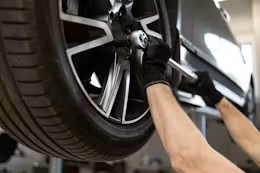
Check tyre pressures. EVs carry extra weight from the battery, and a fully loaded car for a week away adds more on top. Correct pressure protects your tyres and your real-world range. Check tread depth and the spare (or repair kit) while you're at it.
Give the car a once-over. Lights, wipers, screenwash and tyres are worth checking before a longer journey. Ask someone to help check your brake lights and indicators. For a wider look at the checks worth making throughout the year, see our guide to regular electric vehicle maintenance and safety checks.
Plan your charging stops in advance. Before a longer journey, it's worth understanding how much range you have, where you'll need to charge and how long you might need to stop. Our guide to charging an electric vehicle covers the basics, including the different types of charger and what to expect when you arrive.
Apps like Zap-Map can then help you plan a route around rapid chargers, check their status and see reported availability. A few minutes of planning can save a lot of uncertainty later.
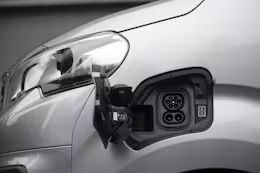
Pack your charging cable somewhere accessible - not underneath the cool box and three suitcases. You'll want it within easy reach, not buried at the destination end of a packed boot.
The people
- Check everyone's got their licence, and that your insurance and breakdown cover documents are somewhere you can find them (a photo on your phone is a sensible backup).
- If your lease includes maintenance, breakdown cover is usually part of the package. Some brand-new cars also come with manufacturer cover for the first year. It's worth checking which applies to you, so you know whether you're already covered or need to sort your own.

On the day: essentials for passengers
A few extras make a long drive easier for everyone in the car:
- Charging cable and any adaptors, plus your charging apps/RFID cards logged in and ready to go
- Portable phone chargers and a few offline entertainment options for patchy signal areas
- Snacks and water; useful for the drive, and handy again during charging stops A blanket or layer for cooler evenings, especially if you're heading somewhere coastal
Where to pack them:
- In the packing chaos take a moment and think about what's going where in your vehicle: keep anything you'll need mid-journey; cable, snacks, or phone chargers for example, in a bag you can reach without unpacking the boot. Save the bottom-of-the-boot space for things you won't need until you arrive or for "just in case items" you might not need at all.

Plan breaks every 2-3 hours
This is where an electric car (or van) road trip has a genuine advantage. A charging stop is a built-in excuse to get out, stretch your legs, and let everyone reset, rather than feeling like a delay.
-
Make the stop worth it. Choose a charger near somewhere scenic; a village, a coastline, a National Trust car park, rather than always defaulting to the same motorway services.
-
Get some fresh air. A short walk while the car charges does everyone good, especially kids who've been sat still for a couple of hours.
-
Think of it as part of the journey, not an interruption to it. Some of the best bits of a road trip happen in the gaps between driving.
Other manufacturers offer similar features under different names, so if an overnight stop is part of your plan, it's worth checking your car's app before you go. A couple of things to bear in mind:
-
Running climate control overnight will use some charge, so factor that into your plan for the next day's charging stop
-
Check what your manufacturer's app calls the feature and what the minimum battery requirement is, it varies by brand
-
It's still worth a proper night's sleep in a bed when you can get one, but for a scenic overnight halfway through a long drive, or as a fallback option on a camping trip it's a useful option to have
Taking your car abroad
Thinking of taking the family further afield this year? If your car is leased through DriveElectric, get in touch with us before you travel. We'll need to arrange the right paperwork on your behalf, and there are a few things worth sorting in good time:
-
VE103 vehicle registration document - required for taking a leased or financed car abroad, as proof you have permission to take it out of the UK
-
Insurance confirmation - check your policy covers driving in Europe, and get a green card if needed
-
Breakdown cover for Europe - make sure your cover extends beyond the UK, and check what's included for EV-specific recovery
-
Charging networks abroad - most of Europe uses CCS, the same standard as the UK, but it's worth checking coverage and app compatibility for your route before you go
Get in touch with our team as early as you can before your trip, it gives us time to sort the right documentation without any last-minute stress.