


Taking your electric car aboard: everything you need to know
Few things are more exciting than a road trip. Who doesn’t love those giddy feelings of anticipation as you pack up the car, polish your sunglasses and put together a playlist of your favourite driving songs? Just a short hop on the ferry, or Eurotunnel, can open up a vast array of incredible destinations across Europe and beyond...
But if you’re driving an electric car abroad, you might have a few questions. Here we answer those we’re asked most often, including things like what paperwork you need and where you can charge up your electric vehicle abroad.
What do I need to drive abroad?
There are a few essentials you need to drive abroad legally. First up, the obvious – your driving licence (not provisional). Check it’s still in date, as they need to be renewed every 10 years.
Next, you need to ensure your car insurance covers you for driving abroad. Most policies include some level of European cover, although you may need to extend this to fully comprehensive as some insurers may ask to be told when you’re going abroad and only provide third-party cover when you do (lease customers are required to have fully comprehensive cover). It is also worth noting that as part of your insurance plans you may be required to take your motor insurance certificate.
As well as personal travel insurance, breakdown cover is another essential you should have. If this isn’t included as part of your motor insurance or contract hire agreement, make sure you arrange it before you set off. 24-hour roadside assistance, emergency accommodation, alternative travel arrangement and recovery of your vehicle back to the UK are all preferable things for inclusion in a policy.
Taking your lease car abroad
When you lease an electric car, the vehicle funder becomes the registered keeper of the vehicle.
To drive it abroad, you will need to obtain the appropriate foreign travel documentation.

This includes a Vehicle on Hire Certificate (also called a VE103) and a letter of authorisation from your lease company. This is something we can help you with, or you can apply for it directly through the RAC. It’s best to organise this in as much time as possible. A couple of weeks should be fine, but there are options if you need a quick turnaround.
However, it is worth noting that if you are hiring or borrowing the vehicle to take abroad e.g., a company-owned vehicle then you’ll need a letter of authorisation from the registered keeper of the vehicle as well as the original vehicle registration document or a vehicle on hire certificate as we mentioned previously.
Legal requirements and key considerations
There are some other things to consider to ensure your trip goes as smoothly as possible. Check any relevant legal requirements such as speed limits, local laws and laws regarding child restraints. You’ll need a first aid kit in your car if you enter certain countries in Europe, with other legal requirements including a fire extinguisher, reflective jacket, warning triangle, headlamp beam reflectors and spare bulbs.
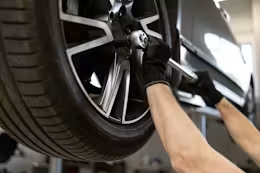
In terms of your car itself, it’s a good idea to check things like your spare wheel (if you have one), and that your tyre pressures are correct for the weight you’re carrying. Fix a GB/UK sticker on the back of your car if the number plate doesn’t have a UK identifier, and pack your UK Global Health Insurance Card (GHIC). It’s also wise to inform friends or family members of your planned itinerary. Give them a copy of where you’ll be and when letting them know about any changes as necessary.
How much should I charge my electric car?
If you’re wondering how much to charge an electric car, it’s often advisable to charge up to around 80% of full capacity to prolong optimum battery life.
You may wish to go beyond this when you’re abroad, however, as you may prefer to have more range in reserve. This may particularly be the case if you’re covering large distances either to get to your destination or if you’re visiting several different places.
Is there electric car charging stations abroad?
Driving abroad can be a real pleasure. Long, open roads through varying landscapes can give you a whole new perspective on the countries you visit.
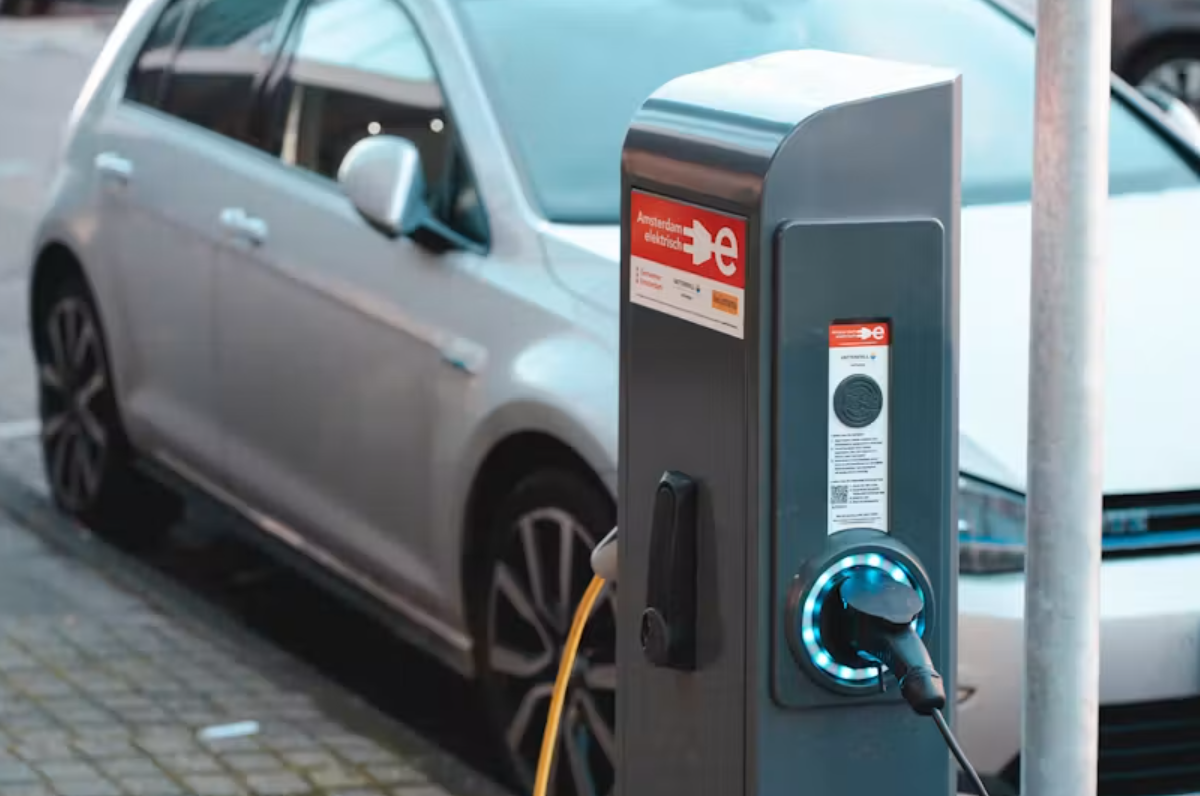
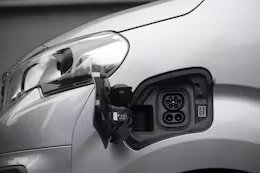
But You’ll need to make sure there are suitable electric car charging stations along those roads if you drive an EV. It’s also vital to make sure that you’re able to pay to use them. The faster your car can recharge the better in terms of wait times, while you may want to use an electric car charging stations route planner to map out your trip. As with longer UK journeys and staycations, it pays to plan ahead and do your homework to find the best places to charge along your route.
How much does it cost to charge an electric car abroad?
As in the UK, charging prices vary between operators and countries, and the price you pay can depend on the network, location, charger speed and payment method. Some networks offer lower rates to registered customers or members, so it’s worth checking the charging options available along your route before you travel.
The way you access chargers is also becoming simpler. Many newer public chargers support direct payment, including contactless card payments, while others still require you to use the operator’s app or a roaming service. In the EU, new rules introduced from 2024 onwards have also been driving greater consistency around payment and pricing at publicly accessible charging points.
It’s still a good idea to have a few charging apps or roaming options set up before you leave the UK, particularly if you’re travelling across several countries. Services that provide access to multiple charging networks through a single account or charging card can help reduce the number of apps and accounts you need to manage.
Always check the current price before starting a charging session, as tariffs can change and some locations may also apply additional fees, such as parking, connection or congestion charges.
Driving a Tesla abroad
If you have a Tesla, travelling across Europe is well supported by Tesla's Supercharger network. Tesla now has more than 80,000 Superchargers worldwide, with stations positioned along major travel routes and most sites offering multiple charging bays.
Tesla's Trip Planner can automatically factor Supercharger stops into your route, taking your destination and current charge level into account. You can also use the Tesla app to find Superchargers, check availability and view charging information while you're travelling.
You aren't limited to the Tesla network, either. Tesla vehicles can also use compatible third-party charging networks, while selected Tesla Supercharger locations are now open to other EVs, depending on the vehicle and market. Availability varies by location, so it's worth checking the Tesla app or Tesla's Supercharger map before setting off.
One useful change for European travellers is that Tesla says Supercharger pricing in Europe includes peak and off-peak rates, with current prices and peak times shown in the vehicle's navigation system and the Tesla app. Charging prices can change, so checking the cost at your chosen location before plugging in is recommended.
Your handy checklist for taking your electric car abroad
- Valid driving licence
- Appropriate car insurance & motor insurance certificate
- Green card from your insurer (it can take up to 6 weeks for you insurer to issue one, so plan ahead!)
- DVLA driver record copy & licence check code (if needed)
- Comprehensive vehicle breakdown cover
- Personal travel insurance & relevant documents (for the whole party!)
- Vehicle for hire certificate (VE103)
- Letter of authorisation (check if for business contract hire)
- International driving permit (where necessary)
- Passports
- Visa (where necessary)
- Familiarise yourself with local laws and driving code
- Check vehicle condition
- Pack UK Global Health Insurance Card (GHIC)
- Share itinerary with family and/or friends